 Nidhi Thakur
 9 min
9 min


Have you ever seen instant ads popping up on your screen all over social media? Well, it's all because you are a part of the search funnel. With the changing market scenarios, the definition of search funnel has become different now. The rise in businesses has increased competition in the market. Therefore to break the generic and stand out in the crowd, you need a strong search funnel. But what is a search funnel and how does it help in marketing?
In this blog we will discover stages of search funnel and how you can create one for the success of your business. Continue to keep reading more.
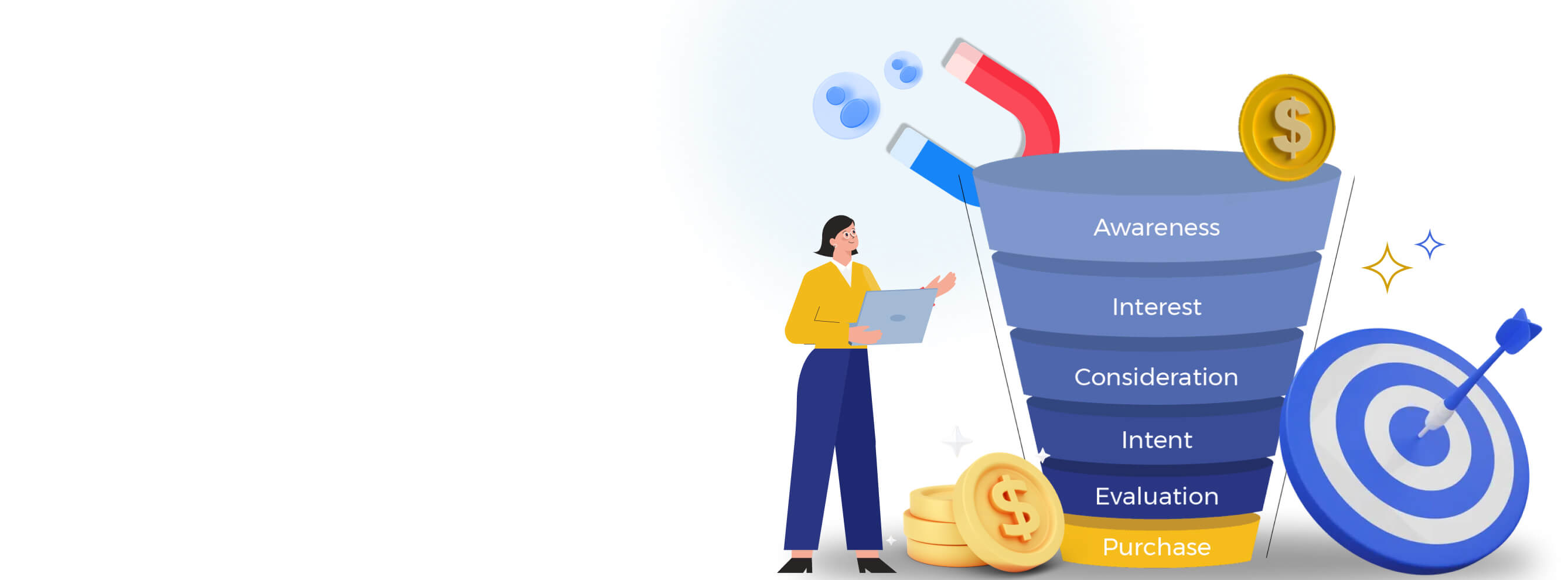
Marketers use search funnels for successful marketing campaigns. Search funnel is a journey of the user from potential prospect to the buyer. It is a process of conversion that makes the journey of the user easy and smooth.
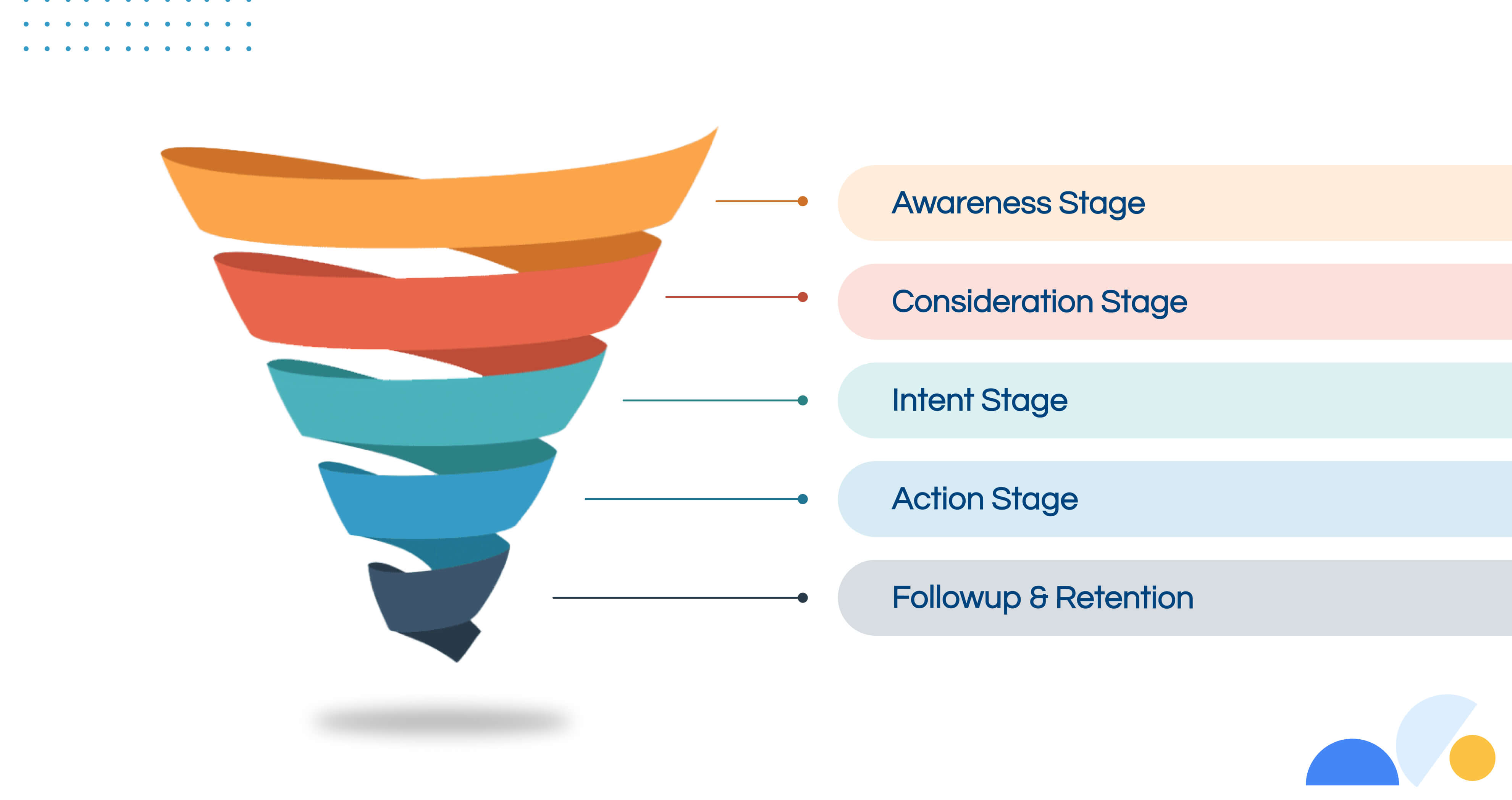
There are basically six stages of the search funnel. Let’s understand them in detail.
The first and foremost step of the customer journey is the awareness stage. It is an essential step in the buying journey of the consumer.
You can create awareness through blogs, articles, ads, educational content, videos to talk about the product and services that you are offering.
This stage should raise awareness about your brand and what you are offering. Once the consumer becomes aware and becomes an initial prospect, now it moves to the consideration stage.
Moving on to the consideration stage, it is the step where the buyer is comparing products, and looking forward to make a purchase.
At this point you should start promoting your product or services through UGC ( User-generated content), previous customer reviews, testimonials, guides, infographics and videos to build trust and authenticity of your brand.
You can use SEO for the best reach and showcase exclusive offers to make sure consumers consider your brand.
When buyers add products to their cart or have asked queries to the customer service representative, it indicates that they are interested in your offering and might make a purchase.
This stage is called the intent stage where potential customers are showing interest in your offerings. Brands can promote discounts, free trials, BOGO ( Buy One Get One ) offers, to influence consumers to make transactions.
Once the potential customer has made up their mind and is now ready to make a purchase, that’s when it's called the action stage. This stage focuses on fulfilling customers needs, expectations and requirements.
Make sure to provide constant 24/7 support to the customer and be ready to receive feedback. This begins the stage of followup and retention.
The goal is to get repeat customer orders and increase revenue with the help of followup and retention stage.
Another important point to keep in mind is to keep the customers satisfied and solve their queries from time to time. Provide constant support, rewards to keep the customers engaged and happy with your brand.
Maximize your revenue with top-tier search funnel strategy. Leave your competitors behind with Edifying Voyages
Book A Call Now!
Buyer's journey is a continuous process where search intent plays an important role. It defines the target audience, niche, and makes the process 2x easiest. But what exactly is a search intent and how does it work?
Here is an overview.
Whenever a consumer is searching for something, there’s always a motive behind it, that is known as search intent. In other words search intent is the purpose of the user behind the search query.
It helps in defining the target audience and what the customer is actually looking for. Furthermore, it makes it easier for the brand to keep the consumer engaged and showcase products or services relevant to their interest.
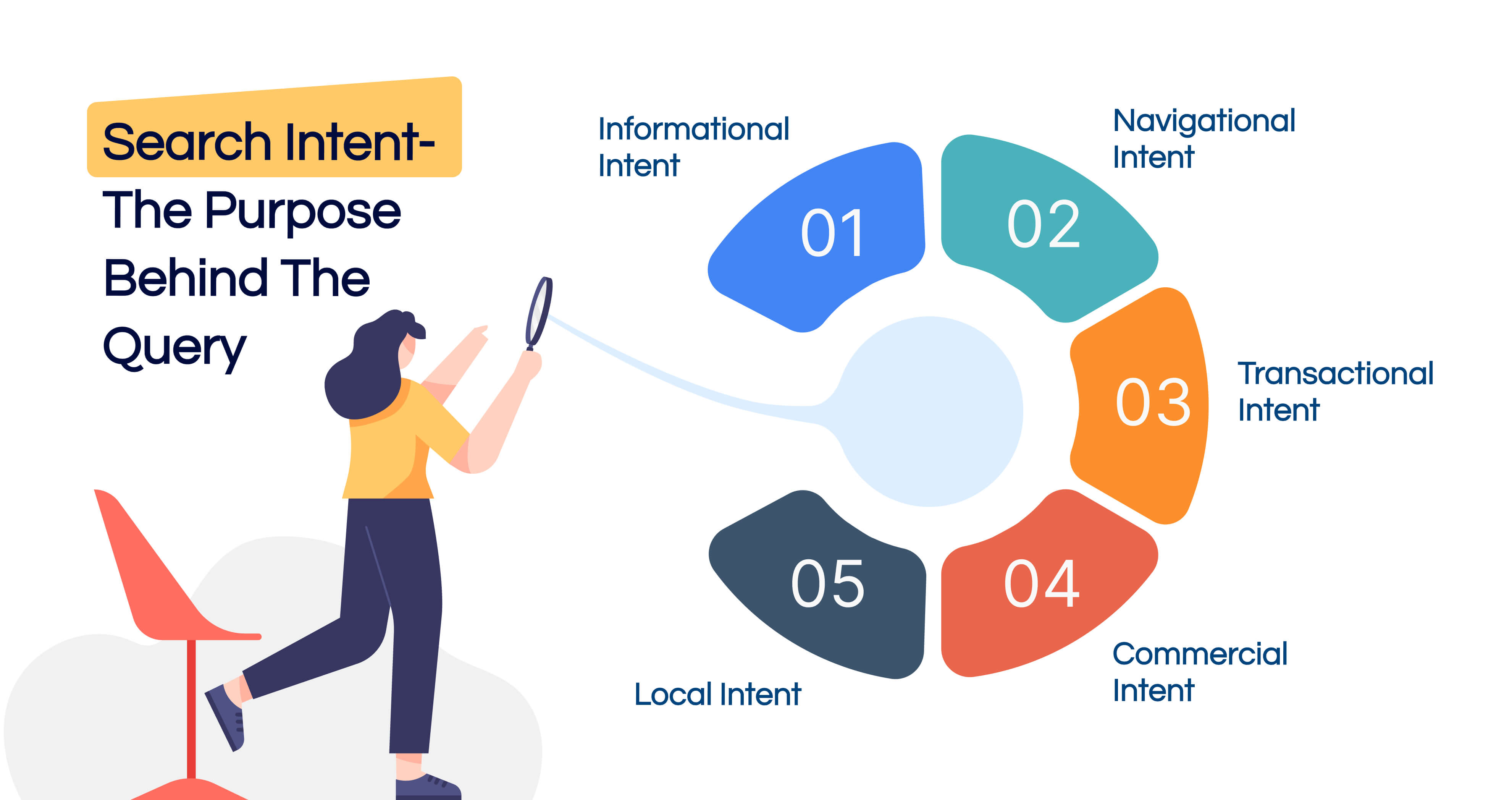
On the basis of different user perspectives, search intent varies. It is usually of five types.
Informational Intent: Users who are looking for solutions or information on various topics like:
Are some of the key examples of search queries with informational intent. It answers What, Who, How, Guides and many more questions. Brands can create long format content like blogs, guest posts, and FAQs to build trust with their audience.
Navigational Intent: During this search query, the user is specifically looking for specific websites, places or things. For example, if someone is searching “Instagram Log In” that showcases a specific query.
Transactional Intent: It indicates the intent of buying or purchasing any product or service. Key examples include:
Commercial Intent: It represents that the user is searching for the best product, recommendations, or detailed information before making a purchase. It includes queries like:
Local Intent: It indicates the query of the user who is looking for specific places to visit, locations or destinations.
Are few key examples of this intent.
Search intent plays a crucial role in the marketing. It makes the overall marketing efforts effective, and efficient. It increases the chances of the prospect to turn into a customer and many more aspects. Let’s discuss them below.
Search funnels work best when indulged with effective marketing campaigns. If you are looking to boost your ROI, consider having Google Ads. It is one of the best tools created by Google to implement effective PPC strategies. Now, let’s understand about it.
Edifying Voyages gives you successful marketing strategies to boost conversions. Drive proven results now.
Get Free Consultation Call!Have you ever searched something on Google and bumped into a few sponsored posts? Well , that is where the Google Ads come into picture!
Google Ads is a prominent tool that helps in creating PPC campaigns, boost conversions, attract clients, increase your brand reach, and maximize ROI.
Google Ads is a leading advertising platform which gives you efficient results. But to boost your brand awareness, first you need to create one effective campaign.
Now let’s discover what are the different stages of Google Ads search funnel and how can you create one?
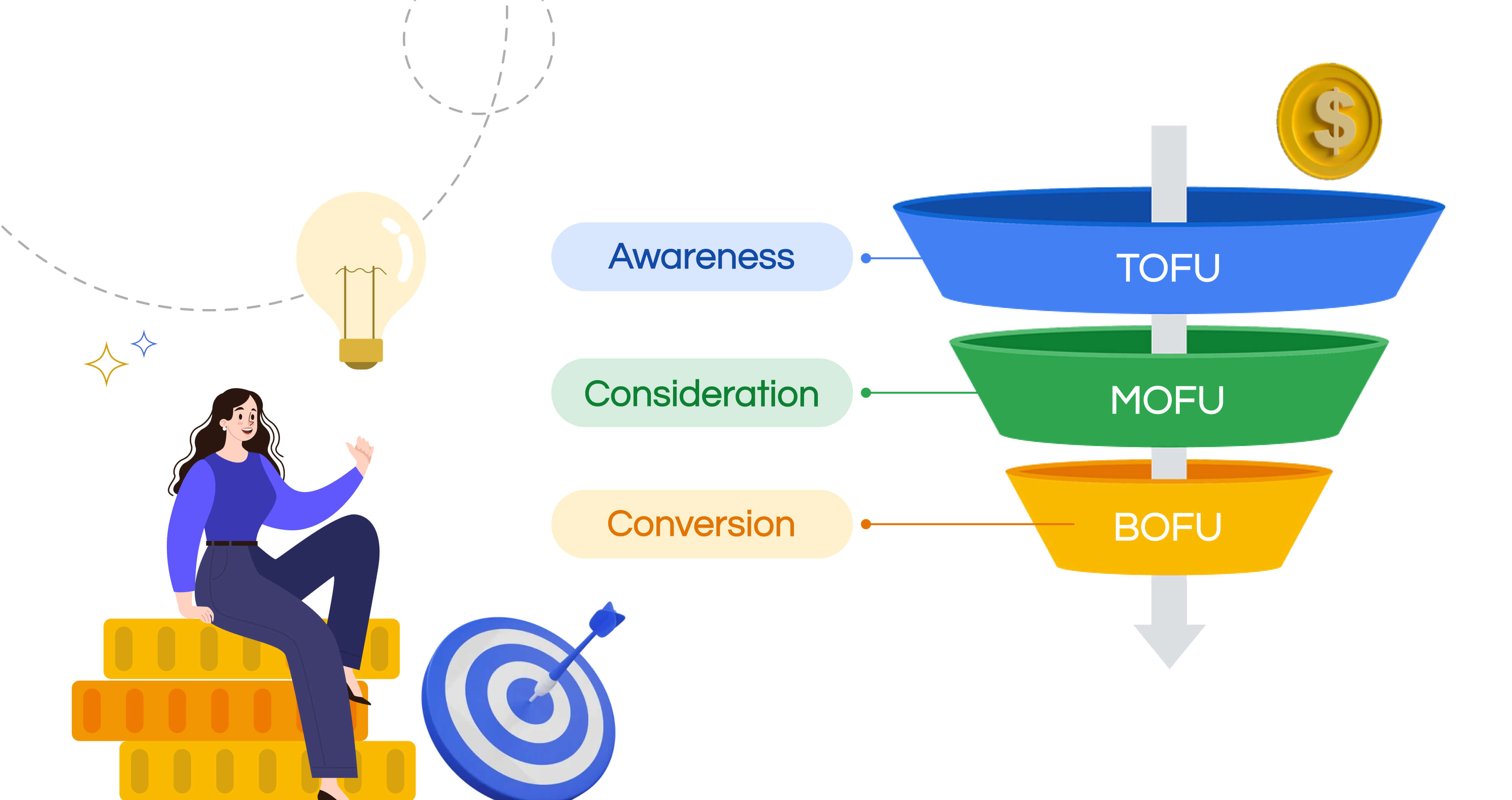
It is the first stage of the marketing funnel that helps in introducing your brand. It helps in raising awareness about your brand, product, or service to a large number of audiences.
At this stage, marketers are targeting cold prospects, therefore it's always better to talk about brand’s USPs (Unique Selling Points).
At this stage users are actively looking for solutions or have previously seen your ads. These leads are usually called warm leads and likely to become customers.
This is the most important stage of the funnel. Here warm prospects turn into hot leads and finally into customers. Hence, the final conversion takes place at this stage.
Therefore make sure to optimize landing pages to its maximum efficiency and generate revenue through Google Ads. Here is what you can do to drive high profit margins.
For more specific conversion, brands can use content like free shipping, fast delivery, special deals and discounts, free gifts, social proof and build a sense of urgency for easy transactions.
Google Ads search funnel has made it easier for the business as well as advertisers to effectively promote their product and attract new clients. Let’s discuss one by one how Google Ads search funnel has impacted both of them.
Here are a few benefits that businesses can derive by using Google Ads search funnel.
Advertisers can significantly improve their marketing funnel by using Google Ads. Here is how:
With the above mentioned information, we hope you now have a better understanding of what a search funnel is and how productively you can use it to enhance your marketing strategy.
Looking forwards for top-notch marketing solutions, get in touch with Edifying Voyages- a leading organic seo agency that provides top-tier marketing solutions.
Search funnel in the marketing is a functional funnel that explains the buyer's journey from cold prospect to final conversion.
In research and marketing, funnel categorizes broad topics into specific stages from initial stage to final stage.
The four stages of the search funnel include awareness, interest, decision and conversion. These stages define the customer's journey.
Invisible funnels focus on building trust, authenticity and relationship with the customers. It targets those people who are researching or looking for specific solutions, products, or services.