
 Nidhi Thakur
 8 min
8 min


Key Takeaways
Spend two minutes on any SaaS marketing forum and the same frustration keeps coming up. Companies pour money into paid acquisition, the numbers look decent for a while, and then the budget gets trimmed and everything stalls. Organic search doesn't behave that way. Done right, it keeps producing long after the initial work is finished.
That said, figuring out how to improve SEO for SaaS companies is not the same as figuring out SEO for a clothing store or a local plumber. The person buying a $400/month HR tool isn't making that decision after clicking one ad. They're spending days on it reading comparison breakdowns, sitting through demos, forwarding articles to their manager, checking what people said on G2 six months ago. By the time they fill out a contact form, they've already formed a strong opinion about which tools are worth talking to. SEO must show up at every stage of that process, not just when someone's ready to buy.
In fact, organic search drives 53% of all trackable website traffic on average, making it one of the most reliable long-term acquisition channels for growing businesses.
A search for software usually doesn't end with a signup. Someone researching a CRM today might still be comparing options next week. Another person could spend days reading reviews, watching product walkthroughs, or asking colleagues for recommendations before even thinking about booking a demo. That's fairly normal in SaaS.
The decision often involves more than one person as well. The questions asked by a founder, operations manager, and IT lead are rarely the same. What convinces one stakeholder may not matter much to another. Because of that, the path from search to signup tends to be longer than many companies expect. A blog post, a comparison page, a customer review, and a product page can all play a role before a decision is made.
Any effort to improve organic SEO for a SaaS company needs to take that reality into account. The goal isn't simply to rank for a keyword. It's to remain visible throughout a research process that can stretch across multiple searches, pages, and touchpoints.
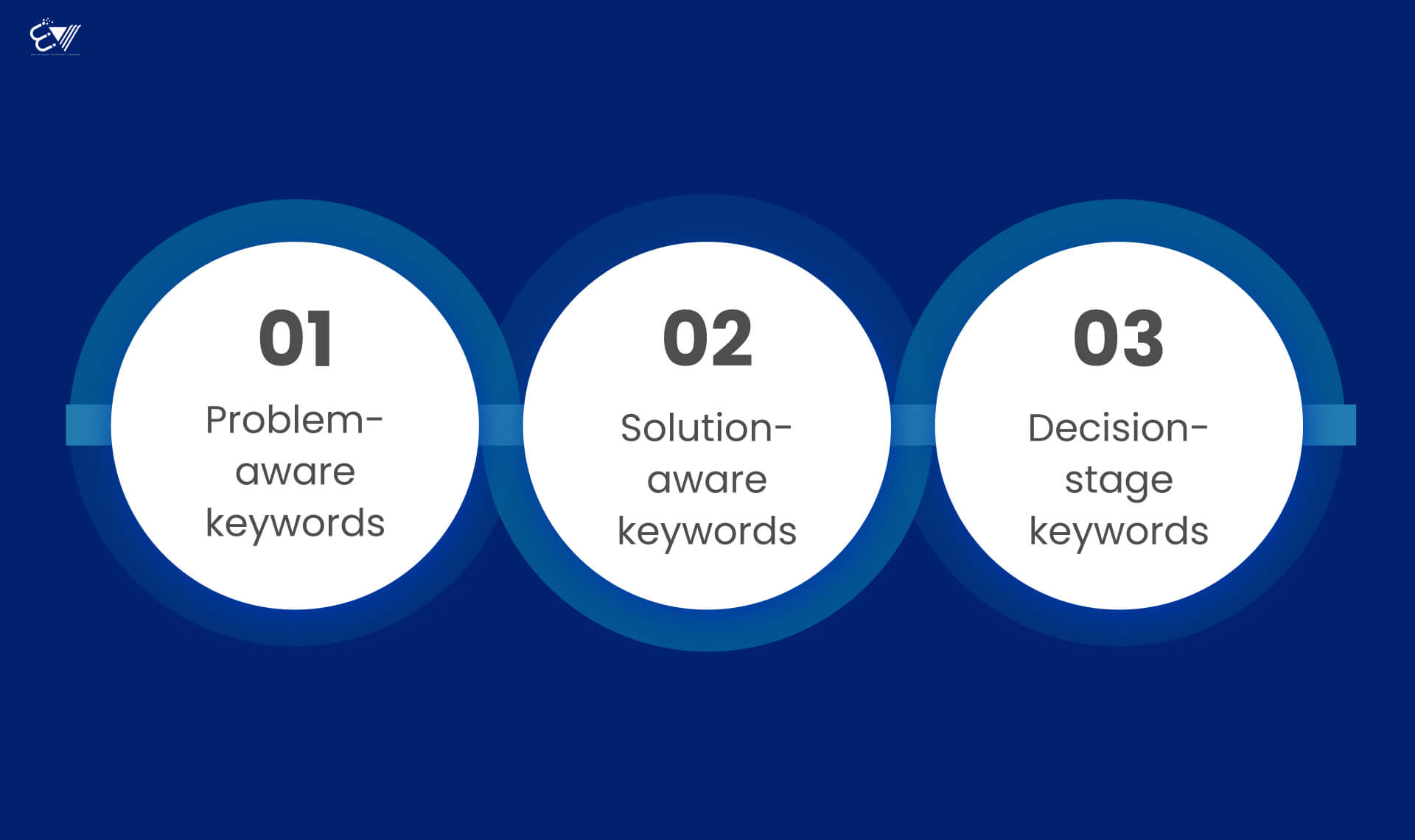
Here's something most SaaS teams learn the hard way ranking number one for a term that gets ten thousand searches a month means nothing if none of those searchers are close to buying. Keyword research for SaaS must be anchored in buyer intent, not just traffic potential. This is honestly one of the biggest unlocks in how to improve SEO for SaaS companies shifting the mindset from "what gets searched a lot" to "what does someone search right before they're ready to buy." Here are three Keyword categories that drives the pipeline:
Target people who know something is wrong but haven't figured out the solution yet. "Why are my team missing project deadlines" or "how to reduce support ticket volume" are searches worth ranking for even if they never mention software. These visitors can be nurtured into buyers.
Come from buyers who have identified the type of tool they need. "Customer success software for SaaS" or "automated billing platform for subscription businesses" these are mid-funnel and convert well when the landing page is built properly.
Money keywords. "[Competitor name] alternatives," "[Tool A] vs [Tool B]," "best project management software for marketing teams" someone typing these is actively shortlisting. Being visible here is non-negotiable.
Discover keyword opportunities aligned with buyer intent, helping your SaaS business attract prospects who are ready to convert.
Find Revenue Keywords
Publishing content just to hit keywords is a waste of everyone's time. The content on a SaaS site needs to do two things at once genuinely help the reader and move them closer to becoming a customer. That balance is harder to strike than it sounds, but it's what separates content that compounds in value from content that just sits there. Content formats that deliver real results for SaaS are:
Pick a core theme that's central to the product say, "customer retention" and build a comprehensive pillar page around it. Then create supporting articles that go deep on every related subtopic. Google rewards this kind of structured topical authority.
These are often the most overlooked asset in SaaS content strategy. When someone types "[Competitor] vs [Product]" they are not casually browsing. They are deciding. Having a well-built comparison page at that moment is incredibly valuable.
"Project management software for architecture firms" or "CRM for independent financial advisors." These pages rank faster because competition is lower, and they convert better because the reader feels like the product was built for them.
A well-written case study showing how a similar company solved a specific problem using the product does more conversion work than almost any other content type.
Many SaaS companies struggle because they write for search engines instead of people, fill content with generic information, and prioritize volume over quality. In most cases, a handful of insightful, well-written articles will deliver far better results than dozens of thin pages created solely to target keywords.
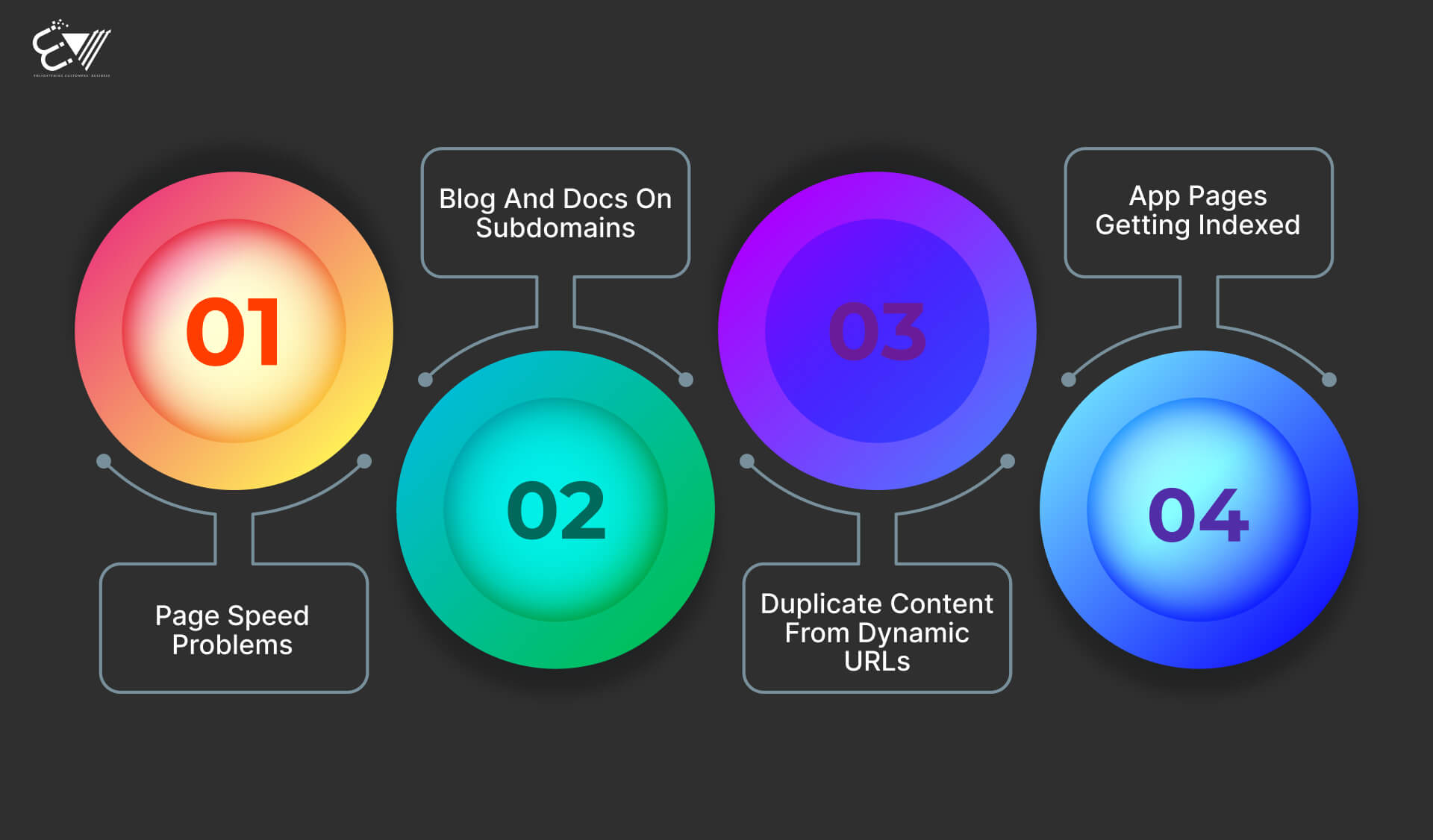
A strong content strategy can only go so far if the technical foundation is shaky. SaaS websites have specific structural problems that show up consistently, and most of them are fixable once someone audits for them. Some common technical problems are mentioned below:
SaaS marketing sites tend to accumulate third-party scripts, tracking pixels, chat widgets, and embedded video players. All of that slows down page load. The Largest Contentful Paint (LCP) metric should be under 2.5 seconds anything above that costs rankings. Google's research found that the probability of a visitor bouncing increases by 32% when page load time grows from 1 second to 3 seconds, highlighting how closely site speed is tied to both SEO and conversions.
Running a blog on blog.domain.com feels like it doesn't matter, but it's a meaningful mistake. Link equity earned by those pages doesn't fully flow back to the root domain. Moving to domain.com/blog consolidates authority.
Filters, sorting parameters, session IDs, and pagination often create hundreds of near-identical pages. Without canonical tags or proper parameter handling, these fragment crawl budget and confuse search engines.
Login pages, dashboard views, and account management pages have no business being in Google's index. Checking that robots.txt and no index tags are applied correctly is basic but commonly missed.
Uncover hidden website issues affecting rankings, user experience, and conversions before they impact your pipeline further.
Get SEO AuditLinks are still one of the most powerful signals in Google's algorithm. For SaaS specifically, the best links come from places that are naturally part of the industry ecosystem not from random guest posts on irrelevant sites. Link sources which are worth prioritizing are:
A fully built-out G2 or Capterra profile with consistent reviews earns links, builds trust, and puts the product in front of buyers who are already in research mode.
Every tool in the product's integration ecosystem is a link opportunity. A simple outreach asking for a mention on a partner's integrations page often gets a yes, the link is relevant, the ask is reasonable.
Publishing a study with real numbers gives other writers and publications something to cite. These citations build naturally over time without ongoing outreach effort.
A well-placed byline in a respected SaaS or marketing outlet builds domain authority and puts the brand in front of the right audience at the same time.
Understanding how to improve SEO for SaaS companies in theory and executing it across a product business are two entirely different things. Most SaaS teams know what needs to be done finding the time and expertise to do it properly is where things stall.
Organic traffic numbers look nice on a report. What matters for a SaaS business is whether SEO is driving trial signups, demo requests, and eventually revenue. That's how Edifying Voyages tracks performance every monthly report connects SEO activity to business outcomes, not just keyword movements. For any SaaS brand that's serious about how to improve SEO for SaaS companies, that kind of accountability is what makes the difference between an agency relationship that's worth keeping and one that isn't.
Search has changed more in the last two years than in the previous ten. AI Overviews are showing up at the top of results for a growing percentage of queries. Perplexity and ChatGPT are becoming legitimate research tools. The brands that figure out how to show up in these new surfaces early will have an enormous advantage. AI fits into the work:
Machine learning tools track SERP behavior across thousands of keywords and flag shifts in ranking patterns before they fully materialize, allowing strategy adjustments ahead of traffic drops.
AI-driven clustering groups large keyword datasets by intent and topic, surfacing content opportunities that would take weeks to find manually.
Running crawl audits, identifying Core Web Vitals failures, and flagging indexing issues across hundreds of pages happens in a fraction of the time it would take manually.
Content structure, entity coverage, and source authority are all optimized specifically so that AI tools cite and surface client content when answering questions in their category.
Build a scalable SaaS SEO strategy focused on qualified traffic, demo requests, and predictable long-term revenue growth.
Book Strategy SessionThere's no shortcut to building organic search into a reliable growth channel for a SaaS business. It takes time, consistency, and a strategy that connects keyword research, content quality, technical health, and link authority into one coherent effort. But the compounding returns are real traffic that grows without proportional increases in spend, leads that arrive without paid campaigns, and brand authority that makes every other marketing channel more effective.
The companies that stay committed to the process often benefit from the momentum later. At Edifying Voyages, that long-term perspective remains at the center of every SaaS SEO strategy.
That situation is more common and sometimes the issue is competition. Other times the content simply isn't targeting searches that potential buyers are making. Publishing more content rarely fixes the problem on its own.
Crowded doesn't always mean impossible. Most competitive industries still contain unanswered questions, underserved niches, and opportunities that larger brands overlook.
More than most companies expect. A slow website, indexing issues, or poor site structure can limit growth even when content is strong.
Technical issues, content gaps, and keyword targeting tend to reveal the biggest opportunities. Sometimes a few overlooked problems are holding back the entire site.