 Nidhi Thakur
 11.5 min


Key Takeaways
A few months ago, a client called us frustrated. They had a well-optimized blog post sitting at position 3 on Google. Solid traffic. Decent rankings. But their competitor, a smaller site with fewer backlinks, was getting the boxed answer at the very top of the page. The featured snippet. Position zero.
"How is that even possible?" they asked.
It’s a question we hear constantly. And the honest answer is: ranking well and winning position zero are two different skills. Most SEO teams are trained for the first and barely think about the second.
That’s a mistake worth fixing because in 2026, position zero isn’t just a nice-to-have. It feeds organic traffic, voice search results, and Google’s AI Overviews simultaneously. According to Semrush, featured snippets pull an average click-through rate of 35.1%, nearly double that of the first standard organic result. If your brand isn’t actively pursuing this placement, you’re handing an enormous visibility advantage to whoever is.
This guide covers exactly how to earn it.
Google Position Zero is the boxed answer Google places above every organic result on a search page. You’ve seen it a thousand times: you type a question, and before you hit a single blue link, Google hands you an answer.
Here’s what most people don’t realize: Google doesn’t give that placement to the highest-ranking page. It gives the best-structured answer. That’s a critical distinction.
A page sitting at position 3 can beat a page at position 1 for the snippet if the content is formatted in a way Google can cleanly extract and display. That’s exactly what happened to our client’s competitor.
One important caveat, though: you do need to already be on page one. According to Ahrefs, 99.58% of pages holding featured snippets rank in the top 10. If your page is sitting at position 18, snippet optimization is premature. Get the ranking first, then pursue the extraction.
It doesn't behave the same way across every context:
Before you write a single word of optimized content, search your target query in an incognito window. Look at what Google is already serving. Then match that format and improve on it. Trying to win with a paragraph when Google is serving a list is a losing battle, no matter how good the writing is.
The most common format. Google pulls 40-60 words that directly answer a question. Triggered most often by queries starting with “what is,” “why does,” or “how does.” The answer needs to land in the first sentence; anything that buries the response after background context will lose the placement to a page that leads with the answer.
Triggered by queries implying sequence or ranking: “steps to,” “best ways to,” “types of.” Google pulls from your actual HTML list markup, or sometimes constructs a list from your subheadings. Each item has to stand on its own without needing surrounding context to make sense. Dashes inside a paragraph block are invisible to the algorithm.
Appear for comparison queries, pricing questions, and data-heavy searches. Google extracts directly from properly coded HTML tables. If your comparison content lives within a formatted layout that isn’t a proper HTML table, a competitor with cleaner markup will take the snippet regardless of content quality. We’ve seen this happen repeatedly with pricing pages.
Pulled from YouTube for instructional and demonstration queries. Google timestamps the exact moment when an answer to the query is returned, which means accurate chapter markers and a closely matched transcript are essential. In 2026, video snippets appear more frequently within AI Overviews for product and skills-based searches. Brands producing video without structuring it for the snippet are optimizing for YouTube while missing the more valuable SERP placement.
Identify missed snippet opportunities and unlock untapped SERP visibility with a strategy aligned to how Google selects featured answers today.
Get Started Now
The argument that featured snippets have lost their value keeps circulating, with zero-click searches, AI disruption, and SERP fragmentation. The concern is reasonable. The conclusion is wrong.
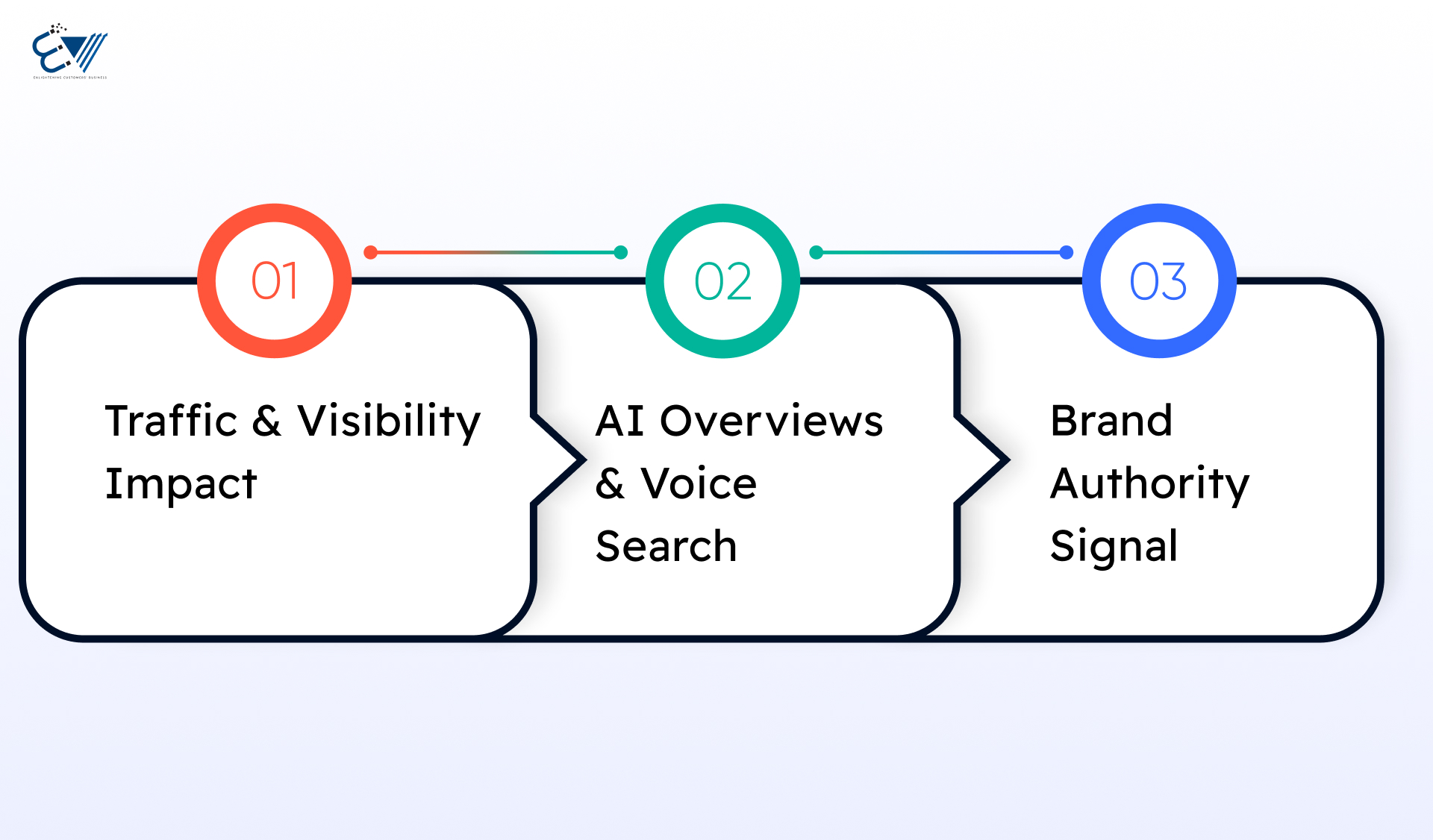
Position zero isn’t losing relevance. It’s gaining influence across more channels simultaneously than ever before. Here’s why it matters more now, not less.
The zero-click narrative oversimplifies what actually happens. Yes, some users get their answer and move on. But Semrush data shows the average CTR for featured snippets is 35.1% for informational queries, many of which users click through to verify, explore, or act.
The ones who don’t click still see your brand at the top of every other result on the page. On mobile, that means your answer fills the entire screen before the user even thinks to scroll. For high-CPC industries, it’s one of the few ways to outrank well-funded competitors without matching their ad spend.
This is where the strategic value of position zero shifted most sharply in 2026. Google’s AI Overviews don’t pull from a random cross-section of the web. They cite pages that already hold featured snippets or rank in the top organic positions. Google is extending the trust it has already established, not discovering new sources.
The practical implication: a single well-optimized page can now hold position zero and appear in AI Overviews simultaneously. Add voice search into the mix, where the featured snippet is the only result read aloud, and you have one piece of content earning visibility across three channels at once.
There’s a dimension to Google Position Zero that rarely gets discussed in traffic-focused SEO conversations. When Google selects your content as the definitive answer to a question, it functions as an editorial endorsement at scale.
In B2B contexts especially, this matters commercially. Decision-makers remember which brand answered their question clearly at the top of the page. That impression carries into the evaluation stage, the shortlist conversation, and often the buying decision. Brands holding position zero regularly tend to see stronger branded search volume and higher return visitor rates, not because they ran a campaign, but because they were useful at the right moment.
Snippet optimization without the right foundation is wasted effort. Three things need to be in order before any of what follows makes sense.
This is a hard requirement, not a soft guideline. According to Ahrefs, 99.58% of pages holding featured snippets already rank on page one. If your target page sits at position 14 or 22, get it there first. The snippet strategy and the core SEO strategy are sequential. Build the foundation, then layer the targeting on top.
The underlying page needs to be technically sound. The fundamentals:
In 2026, Google’s assessment of Experience, Expertise, Authoritativeness, and Trustworthiness is embedded directly into whether a page deserves to be cited as a definitive answer.
Google increasingly distinguishes between content written by someone who has done the work and content that summarises what others have published. For snippet candidates, practitioner knowledge consistently outperforms aggregated research even when the latter is well-structured. If you want Google to present your content as the definitive answer, it needs to read like it was written by someone who actually knows the subject.
Audit your current SEO performance and identify where your competitors are capturing clicks through featured snippets and answer-first content strategies.
Analyze My SEO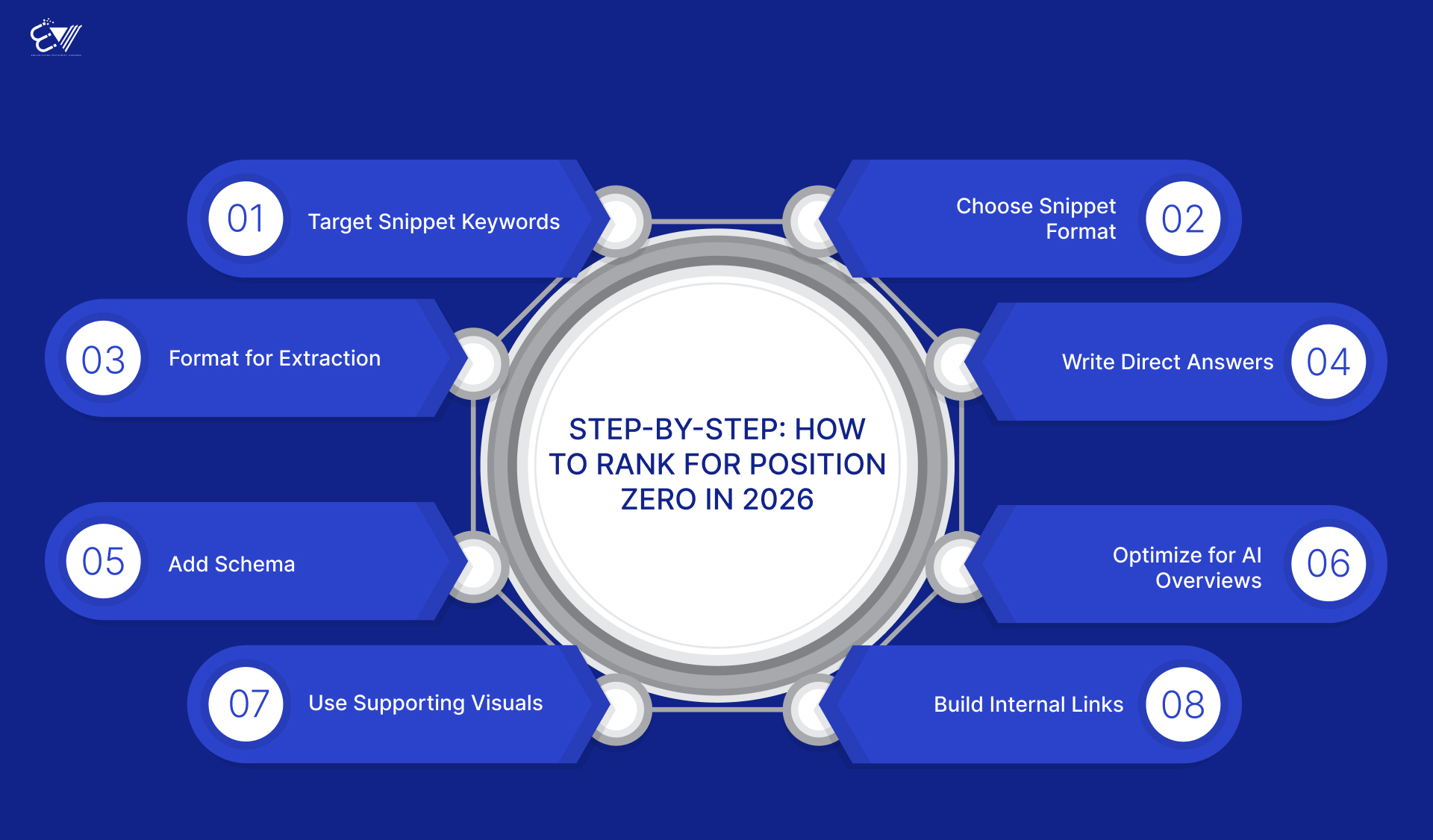
The foundation is in place. Here’s the execution. Each step builds on the last, skipping one means handing an opening to a competitor who didn’t.
Start with your existing top-10 rankings. Filter in Semrush or Ahrefs for queries where a featured snippet is already present. These are your highest-probability targets. Google has already decided this query deserves a snippet. Your job is to be the best answer.
Prioritize by intent. Snippets consistently appear for question-based searches (“what is,” “how does,” “why does”), how-to and process queries, and definition or comparison searches. Transactional queries rarely produce snippets.
Then look at who currently holds the snippet. A thin or outdated page is an immediate opportunity for displacement. A well-resourced authority site requires a more patient approach, but it’s rarely untouchable.
Before writing anything, search your target query in an incognito window. Study what Google is currently serving. That format is your brief.
Then improve on it. A vague five-step list becomes a precise eight-step one. A sparse comparison table becomes a comprehensive, cleanly structured version. A thin paragraph answer becomes tighter and more authoritative. Google replaces the current snippet holder as soon as something more useful is indexed.
Good content that’s poorly structured doesn’t get extracted. This is where most well-written pages fail. The rules by format:
The subheading above your answer block should mirror the language of the target query. Signal clarity matters more than creative heading writing at this point on the page.
This is the single most important content element for earning position zero. A concise, self-contained response is placed at the top of the relevant section before any elaboration or supporting detail.
Keep the structure tight:
Write in third-person declarative language. Google doesn’t extract first-person or brand-referencing content. The answer should read as an objective response, not a pitch.
Schema doesn’t guarantee a snippet. What it does is remove ambiguity about what your content means and what question it answers, which matters when Google is choosing between several otherwise-similar candidates.
Match schema type to content:
Validate with Google’s Rich Results Test after implementation. A broken schema introduces noise into how Google reads the entire page and that noise tends to hurt more than missing schema would.
Google’s AI Overviews draw from the same pool of sources that hold featured snippets. Earning position zero and earning AI Overview citations aren’t separate goals. They’re fed by the same content signals.
Three things matter most:
Visuals near the answer block strengthen page engagement signals and improve the likelihood that Google displays an image alongside your snippet.
Three rules worth keeping:
A single optimized page rarely holds a snippet without support behind it. Google’s confidence in a page as an answer source is shaped by the site’s topical depth: how thoroughly the broader subject is covered across interconnected content.
Every snippet-targeting page should connect to a network of related content. Each supporting page reinforces the authority of the central one.
Two internal linking rules that directly affect snippet performance:
Most brands that aren’t earning featured snippets aren’t failing because of bad content. They’re failing because of structural and strategic errors that disqualify otherwise strong pages. Nearly all of them are fixable once you know where to look.
Ranking for Google position zero is not a one-time task. It is a sustained practice requiring technical precision, content strategy, and a clear read on how the SERP is evolving. That is the work Edifying Voyages does.
Every engagement starts with an audit. A direct assessment of where the brand stands in search, what is blocking featured placement, and what the most efficient path forward looks like. From there, the execution is specific:
The brands winning position zero on Google in 2026 are doing so with a structured strategy and technical rigor, not content volume alone. That is the standard Edifying Voyages applies, and the standard your brand deserves.
Connect with our SEO specialists to evaluate your current rankings, identify snippet opportunities, and build a strategy that drives measurable search dominance.
Talk to ExpertsPosition zero isn’t a secondary goal or a bonus outcome. In 2026, it’s one of the most valuable placements in search: feeding organic SEO traffic, AI Overview citations, and voice search simultaneously. And it’s still under-pursued by most brands, which means the opportunity is real.
Earning it takes methodical execution. Holding it takes consistent maintenance. Both require the same foundation: clean structure, authoritative content, and strong E-E-A-T signals built over time.
The brands investing in Google Position Zero now are building search equity that compounds over time. The ones waiting is simply watching competitors answer their customers’ questions first, and that’s a harder gap to close the longer it goes unaddressed.
Google Position Zero is the featured snippet that appears above all organic results. Unlike the first organic result, it’s not determined purely by ranking signals. Google extracts it from the page that provides the most clearly structured answer to a query. A page ranking third can earn the snippet if its content is better formatted than the pages above it, which is exactly the situation we described at the top of this guide.
Yes, and this isn’t a soft guideline: it’s a hard prerequisite. According to Ahrefs, 99.58% of pages holding featured snippets already rank in the top 10. Snippet optimization applied to a page outside the top 10 produces no return until that ranking threshold is crossed first.
Paragraph snippets are the most common, triggered by question-based queries. List snippets to follow how-to and process queries. The format that wins is always the one Google is already serving for that specific query. Matching your content structure to the existing snippet format is a prerequisite regardless of content quality.
Google’s AI Overviews consistently cite pages that already hold featured snippets. Both placements draw from the same trust signals: strong E-E-A-T, clean content structure, accurate sourcing, and fresh content. A page optimized for position zero is simultaneously building eligibility for AI Overview citations, making the work compound across multiple SERP placements.
For pages actively holding a snippet, a quarterly review is the minimum: covering data accuracy, example relevance, and whether the snippet format Google is serving has changed. For pages targeting snippets not yet earned, a refresh every six to eight weeks keeps content competitive and signals active maintenance to Google.
Yes. Featured snippets are not permanent. Google reassigns them based on shifts in content quality and competitor activity. Recovery involves tightening the answer block, refreshing supporting data, and improving structural formatting. Responding within two to four weeks of losing a snippet gives the best chance of reclaiming it before the competitor’s engagement signals solidify.