 Nidhi Thakur
 6.5 min


Key Takeaways
In competitive markets, operational capability earns trust, but visibility determines who gets considered first.
For years, growth in the manufacturing sector followed a familiar path. Relationships were built through distributors, Orders came through referrals, Trade exhibitions created visibility. Sales cycles were long, but predictable.
That system worked well until buyer behaviour quietly began to change. Today, industrial decision-makers start their evaluation process online. And they don’t do it casually they do it methodically. They compare suppliers. They review product capabilities. They check certifications. They analyse past projects and case studies. In many cases, a large portion of this research happens before any direct communication with a supplier ever begins. This shift has fundamentally changed how visibility works. It has also redefined how credibility is built.
A structured digital marketing strategy for the manufacturing industry is no longer just about promotion. It is about ensuring that a company’s operational capabilities, expertise, and reliability are discoverable where modern buyers are already searching.
In manufacturing, marketing cannot begin with promotion. It begins with clarity. When a manufacturing company approaches a marketing partner, the first objective is not traffic. It is alignment. A structured digital marketing strategy for manufacturing industry follows a sequence that connects operational capability with real buyer intent.
Every serious strategy starts with diagnosis. This includes reviewing technical website health, search visibility, competitor positioning, and inquiry patterns. Many industrial websites are structurally sound from a branding perspective but weak from a discoverability standpoint. Without correcting structural inefficiencies, campaigns only amplify existing gaps.
Manufacturing markets are niche-driven. The strategy must identify which industries generate repeat demand, which product lines drive margins, and how industrial buyers search for those capabilities. This prevents wasted effort on broad exposure and focuses visibility where commercial opportunity already exists.
Once priorities are clear, the website must reflect them. Capability pages are structured around search intent. Technical specifications are made accessible. Metadata, internal linking, and page hierarchy are aligned with how search engines interpret relevance. Clarity improves both rankings and buyer confidence.
Search engines measure credibility externally. Authority is built through industry-relevant backlinks, technical mentions, and presence in recognized industrial platforms. This strengthens competitive positioning in markets where trust matters.
A reliable organic SEO company approaches this step methodically, ensuring authority compounds over time rather than appearing artificially inflated.
Manufacturing content should explain, not advertise. Process documentation, compliance insights, use-case breakdowns, and real project examples demonstrate expertise. This attracts qualified industrial search traffic rather than casual browsing.
Digital strategy is not static. Keyword performance, inquiry quality, engagement depth, and industry-level interest patterns are reviewed consistently. Adjustments are made based on measurable behaviour, not assumptions.
This structured approach separates a strategic partner from a generic offshore SEO company operating without industry context.
Manufacturers often lose visibility before conversations even begin. Discover how your digital presence compares in modern industrial search behaviour.
Get Started
Digital marketing often gets discussed as if it were complicated. New tools, new platforms, new trends. In practice, the impact usually comes from doing a few core things properly and doing them consistently. Search visibility is one of those things and for manufacturers working with an experienced organic SEO company, this visibility is built through structured keyword mapping, technical clarity, and long-term authority rather than short-term spikes. A well-structured website does not need to impress with design alone it needs to communicate capability clearly.
Content plays a quieter role, but an important one. Not promotional slogans, but practical insight. Explanations of processes. Examples of completed work. Observations about industry shifts. This type of material signals that the company understands its space in depth.
When search visibility, website clarity, and meaningful content work together, digital presence stops being passive. It begins to support real business discussions. Prospects arrive more informed. Conversations move faster.
That steady alignment forms the backbone of a dependable digital marketing strategy for manufacturing industry.
For years, manufacturing marketing followed a pattern. If one industry segment delivered strong orders, budgets leaned in that direction again. If trade shows worked, the same events were repeated. If referrals drove business, there was little reason to question the formula. But markets don’t stand still.
Today, industrial buying decisions begin long before a supplier knows it is being evaluated. Research happens quietly. Comparisons happen digitally. Technical details are reviewed before a call is ever scheduled. What used to be relationship-first is now research-first.
That shift changes everything. Relying only on what worked last year ignores how buyer intent is forming today. And intent leaves signal clear ones.
It becomes possible to observe:
These are not vanity metrics. They are indicators of real curiosity and potential demand.
Artificial Intelligence simply helps interpret this activity faster. It connects patterns. It identifies where interest is strengthening. It exposes where marketing effort is being diluted. Instead of reacting months later, adjustments can happen early.
Experience still has value. Market knowledge still matters. But experience supported by evidence is far more reliable than experience operating alone.
When insight is built into a digital marketing strategy for manufacturing industry, decisions stop being reactive. Effort shifts toward segments already demonstrating intent. Communication becomes sharper because it reflects actual demand. Conversations begin with context instead of introductions.
Assumptions feel efficient because they are familiar. Data feels uncomfortable because it forces recalibration. In modern manufacturing marketing, recalibration is not optional. It is how growth stays relevant.
A well-structured website should attract serious industrial buyers. Evaluate whether your digital presence truly supports real manufacturing sales conversations.
Request ReviewDigital efforts in manufacturing often begin with a clear objective. A company decides it needs a stronger online presence. A new website goes live. Campaigns are switched on. For a few months, activity increases. Then questions start appearing.
What’s easy to miss is that digital visibility doesn’t move at the same speed as paid listings in a trade directory. Search engines take time to recognize authority. Content takes time to circulate and gain traction. Advertising improves only after patterns become clear. Stopping early resets that progress. In manufacturing, no one expects a production upgrade to deliver peak efficiency in the first week. Machines are calibrated. Processes are adjusted. Output improves gradually. Marketing follows a similar path, even if it feels less tangible.
When digital initiatives are treated like short campaigns, results remain inconsistent. When they are treated like systems reviewed, refined, and sustained something different happens. Search presence strengthens quietly. Prospects begin arriving with more context. Conversations feel less introductory and more specific. Long-term growth rarely comes from bursts of activity. It comes from steady effort that compounds. Digital marketing is no different.
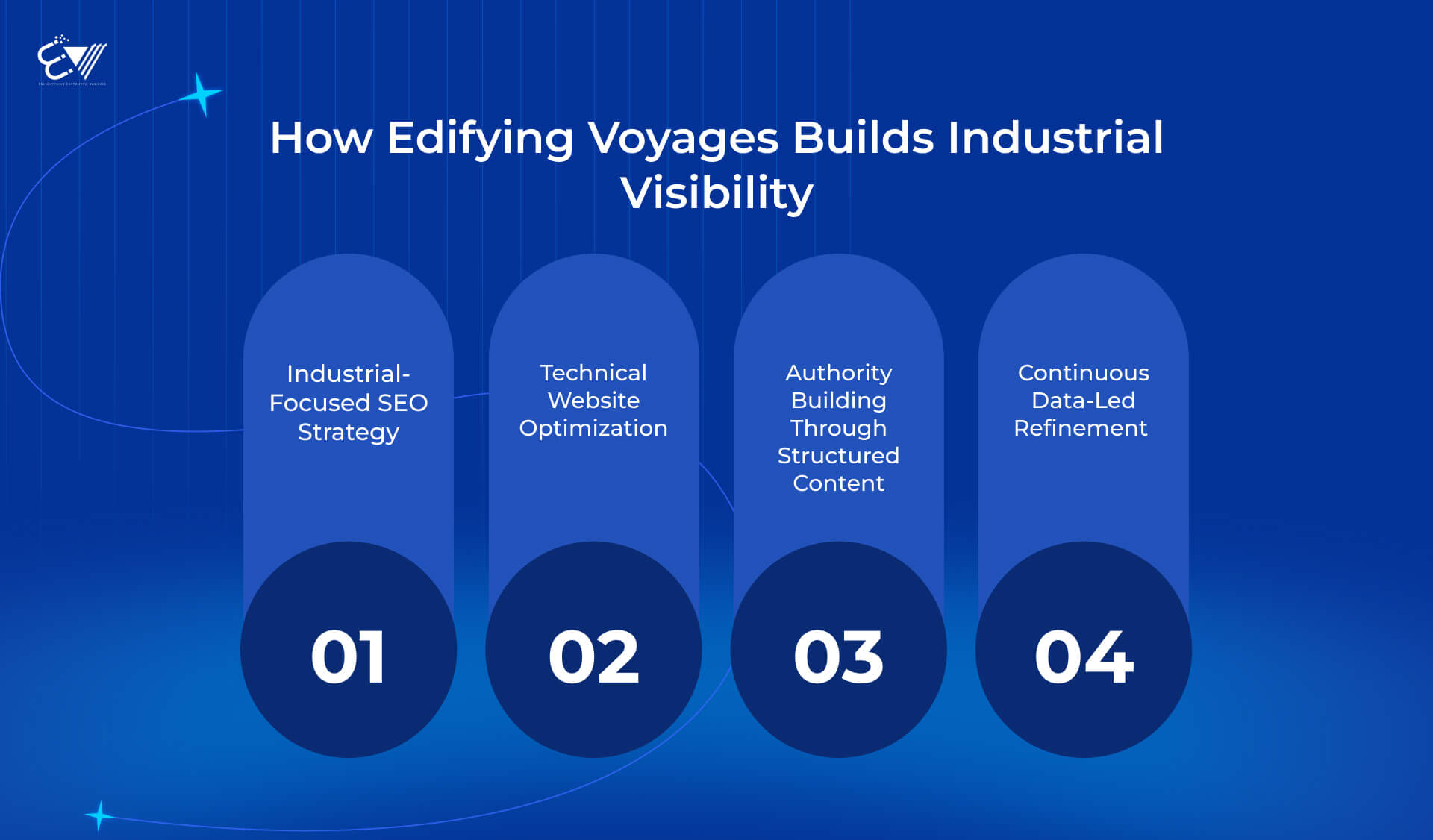
Manufacturing growth requires operational alignment, not marketing noise. Edifying Voyages approaches digital visibility as a structured system, not a campaign.
As an experienced offshore SEO company working with technical industries, the focus begins with understanding product depth, certifications, production capacity, and commercial priorities. Search positioning is built around real industrial demand, not generic keywords.
Industrial websites often hide their strongest capabilities under unclear navigation. We restructure information architecture, improve technical SEO foundations, and ensure critical product pages are discoverable by both buyers and search engines.
Instead of promotional blogs, we create technical explainers, process insights, and industry-specific resources that demonstrate operational expertise.
Performance is reviewed continuously. Inquiry quality, industry engagement patterns, and page-level behaviour inform adjustments. Marketing becomes iterative and measurable rather than assumption based.
Over time, this builds a stable digital foundation that supports industrial sales conversations consistently.
Search visibility can quietly drive consistent inquiries. Understand how structured SEO strategy aligns manufacturing expertise with real buyer demand.
Explore StrategyManufacturing has always been about precision, planning, and long-term thinking. Growth strategies deserve the same discipline. Today, visibility influences opportunity. Buyers evaluate digitally before engaging directly. Brands that present their capabilities clearly online gain an advantage long before negotiations begin. A practical, data-backed approach supported by AI and consistent refinement ensures that operational strength is reflected in digital markets. That alignment transforms marketing from an occasional activity into a structured growth system.
Edifying Voyages helps manufacturing businesses build that system strengthening search visibility, refining digital positioning, and turning online presence into measurable opportunity. In competitive industrial markets, capability matters. But visibility determines who gets considered first.
In many cases, yes but not in the way consumer brands experience it. For manufacturers, the impact is usually seen in better-qualified inquiries rather than high website traffic. When a company becomes easier to find during supplier research, it simply enters more buying conversations. That visibility compounds over time.
Trade exhibitions, distributor networks, and references still generate business. The difference is that most buyers now verify suppliers online before taking the next step. Even a referred company is usually researched digitally. If the online presence feels weak or incomplete, confidence can drop quietly.
Digital growth rarely follows a straight line. Search visibility builds slowly. Advertising becomes more efficient once enough data is collected. Content gains traction gradually. Businesses that stay consistent for several months typically see stronger progress than those who stop early.
Mostly in interpretation. It helps identify patterns which industries are engaging more, which pages attract attention, and which campaigns are underperforming. Instead of relying only on assumptions, decisions can be supported by real behavioral signals.
The focus stays on structure rather than surface-level activity. Instead of launching random campaigns, the process starts with understanding production strengths, target industries, and commercial priorities. From there, visibility is improved step by step through search positioning, clearer website communication, practical content, and continuous performance tracking.